
Product configuration software · 3D configurator platform
Product configurator software. Every step connected.
Configurix combines product configuration software with a visual product configurator platform. Governed choices, interactive 3D, live pricing, branded quotes and project data stay connected so customers, sales teams and dealers define the same valid product.
Saved configuration
Customer project
3D
Updated
Rules
Passed
Price
Calculated
Quote
Connected
CRM
Saved
Handoff
Defined
The visible product, its permitted choices and the commercial record share one configuration ID.
Clear definition
What product configurator software actually does.
Product configurator software helps a person define a product from controlled choices. The simplest tools select a fixed variant. More capable configurators understand dimensions, product structure, compatible components, required options and commercial rules. They guide the user through what the business can sell instead of presenting a blank design canvas.
Configurix adds a connected visual and workflow layer. The choices that update the 3D product can also calculate price, save a specification, create a branded quote and pass approved data into the next project system. This makes the configurator useful before, during and after a sales conversation—not only while somebody changes a colour on screen.
The exact implementation follows the real catalogue. A business can start with one focused customer-facing product, or build a white-label platform serving multiple brands, regions, dealer accounts and operational outputs.
Category language
Different buyer words. One product system to evaluate.
Product configurator software, product configuration software and product configurator platform are overlapping terms—not proof of identical capability. Use the definitions below to turn search language into working acceptance questions.
Product configurator software
The broad buyer category for software that guides people through permitted product choices and produces a saved configuration.
Verify: Confirm whether the tool controls real dimensions, dependencies and outputs or only changes presentation options.
Product configuration software
Usually the same category, with more emphasis on the product model, rules, validation and structured configuration state behind the interface.
Verify: Ask where rules live, how a valid state is identified and how catalogue changes are versioned and tested.
Product configurator platform
A shared product backbone that can power customer, salesperson, dealer, ecommerce and operational experiences instead of one isolated configurator page.
Verify: Test channel reuse, role and market context, saved revisions, publishing controls, integrations and support ownership.
3D product configurator
A configurator whose visible geometry, materials or components respond to selections. The 3D scene may be static-part, modular or parametric.
Verify: Check that every important visual change maps to the same structured state used for price, quote or order data.
Visual CPQ
Configuration joined to commercial price and proposal rules, with a visual representation helping the buyer and seller understand the selected product.
Verify: Recalculate boundary cases and prove that the quote references the accepted configuration ID and revision.
Product customizer
Often a simpler experience for independent choices such as colour, text, artwork or a small set of accessories. Some products need no deeper rule engine.
Verify: Decide whether personalization is enough or whether product validity, dimensional logic, pricing and downstream data are also required.
Connected architecture
Six layers make a configurator commercially useful.
A strong visual experience matters, but reliable product configuration depends on the data, rules and outputs behind it. Each layer needs an owner and acceptance evidence.
Product catalogue
Organize product families, structures, dimensions, materials, finishes, accessories and market availability in a governed catalogue rather than scattered documents.
Configuration rules
Define minimums, maximums, dependencies, exclusions, required selections and review conditions so users are guided toward permitted product variants.
Interactive 3D
Connect geometry, components and materials to the selected configuration so the visible product and the structured specification change together.
Price calculation
Apply price lists, formulas, quantities, installation, tax, discount permissions and market rules to the same selections that define the product.
Quotes and approvals
Turn a saved configuration into a branded proposal with the chosen product, commercial terms, imagery and the next action for the customer.
Project data
Keep customer context, configuration ID, revisions, price, documents and scoped order or operational output connected after the first enquiry.
Platform operating model
What turns one configurator into a reusable platform.
A product configurator platform must keep product truth reusable across people, channels and releases. These six responsibilities are separate from how polished the first 3D demo looks.
Canonical configuration state
One structured record holds the product family, selections, derived values, validity, market context, price reference and revision—not only a screenshot.
Acceptance evidence: Open a saved project and reproduce the same state from its ID and revision.
Channel-specific experiences
A public website, authenticated customer account, dealer portal and salesperson workspace can present different controls while using the governed backbone.
Acceptance evidence: Run one representative configuration through every required channel and compare the resulting record.
Role and market context
Permissions, catalogue availability, price visibility, language, currency, tax and next actions can vary by user, account, brand or region.
Acceptance evidence: Test the same product as a customer, dealer and internal user in two materially different markets.
Governed catalogue publishing
Products, rules, prices, translations and assets move through defined ownership, preview, review, release and rollback steps instead of changing silently.
Acceptance evidence: Publish a controlled catalogue change and verify new, open and accepted projects behave as agreed.
Integration contracts
Stable identifiers and documented payloads connect configuration to CRM, ERP, PIM, ecommerce, documents, order processing or optional production outputs.
Acceptance evidence: Inspect success, rejection, retry and reconciliation behavior with a representative downstream payload.
Observability and support
Events, errors, failed calculations, integration status, release history and ownership make the live product system diagnosable after launch.
Acceptance evidence: Trigger a controlled failure and show where it appears, who is alerted and how the affected project is recovered.
Who it serves
Not only manufacturers.
Configurix can be adapted to the company that owns the product, the partner who sells it and the team that measures, quotes or installs it.
Explore the manufacturer configurator guideManufacturers and product owners
Control how a configurable range is represented across direct sales, websites, showrooms and dealer networks. Product rules and approved commercial data can remain consistent while presentation varies by audience or market.
Dealers and distributors
Give channel partners a guided way to select valid products, use the right catalogue and price list, save customer projects and request or generate the documents permitted for their account.
Retailers and ecommerce teams
Add visual product configuration to a website journey without reducing complex products to a flat list of variants. Customers can explore meaningful choices and continue with purchase or quote-request actions.
Installers and project-based sellers
Capture the dimensions, options, site context and customer decision needed for a made-to-measure project, then continue toward survey, quote, scheduling and installation handoff.
Showrooms and sales consultants
Use one visual workspace during a consultation, compare alternatives with the customer and preserve the selected design instead of reconstructing it later from handwritten notes.
Multi-brand and multi-market groups
Separate catalogues, branding, languages, currencies, tax, price visibility and permissions while maintaining shared governance for reusable product and workflow components.
Configurable product categories
One platform can represent very different products.
The interface can feel consistent while every catalogue keeps its own dimensions, structures, options, prices and downstream data.

Pergolas
Bioclimatic, retractable, fixed, timber, attached, freestanding and multi-bay systems.

Verandas
Frames, glass roofs, side walls, sliding doors, drainage and made-to-measure layouts.

Doors
Openings, constructions, panels, glass, hardware, security choices and finishes.

Fences and gates
Runs, panels, posts, pedestrian gates, sliding gates, motors and entrance systems.
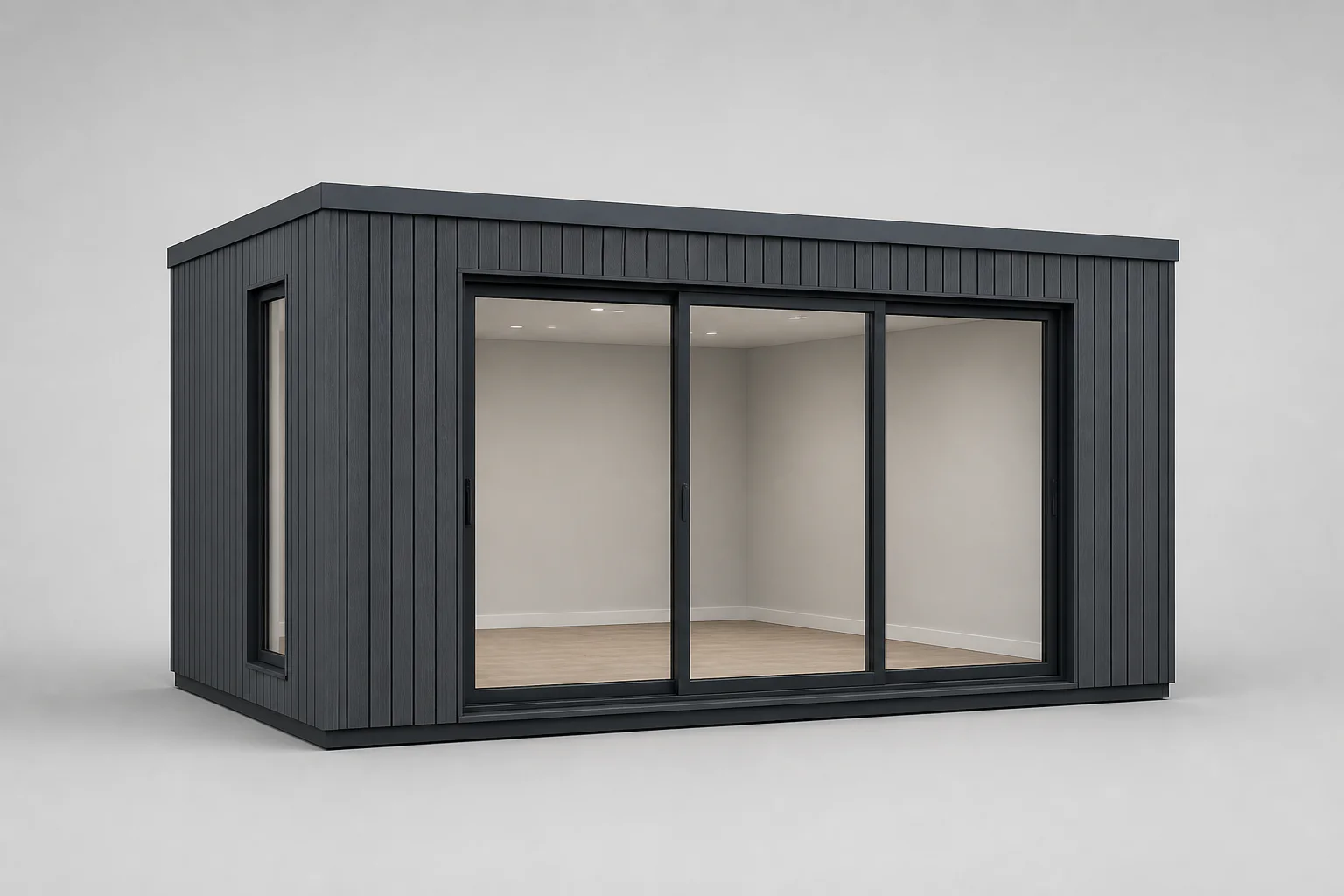
Garden rooms
Footprints, structures, roofs, cladding, insulation, glazing, doors and services.

Carports
Single, double, attached, freestanding, storage and solar-ready configurations.
Connected journey
From catalogue choice to reusable project data.
The steps can appear as self-service, guided selling or an internal workflow. The product record stays recognizable as responsibility moves from one person or system to another.
Catalogue
Start from an approved product family
The user begins with a real range, system or base model. Market, account and role can determine which products, dimensions and options are available.
Configure
Define the product through guided choices
Dimensions, components, materials and accessories update inside the permitted rules. The user receives immediate feedback when another selection becomes required, unavailable or review-only.
Visualize
See the selected variant in 3D
Geometry and materials respond to meaningful configuration data. Desktop, tablet and mobile journeys can present controls differently while preserving the same governed product logic.
Price
Calculate the commercial result
The configuration can drive a visible price, price range, dealer calculation or internal review. Price behavior follows the implemented lists, formulas, permissions and approval rules.
Quote
Save the design and create the next document
The selected product, customer context, imagery and calculation become a reusable project. A branded proposal or quote request continues from that record instead of restarting the job.
Handoff
Move approved data into the next system
Defined fields can continue to CRM, ERP, ecommerce, order processing, scheduling or production. Each output is scoped and tested separately from the visual model.
Tool comparison
Viewer, configurator, visual CPQ or CAD?
These categories overlap, but they solve different problems. Compare the product data and output required—not only the label used by a vendor.
| Tool type | Primary job | Best fit | Question to test |
|---|---|---|---|
| Variant selector | Choose from fixed SKUs or simple attributes | Useful for standard products with little dependency logic | Does it need dimensions, compatibility rules or a saved specification? |
| 3D viewer | Rotate and inspect an existing model | Useful for visual presentation and product understanding | Do selections change structured product and commercial data? |
| Product configurator | Create a permitted variant from rules and options | Useful for option-rich and made-to-measure products | How are invalid, required and review-only combinations handled? |
| Visual CPQ | Configure, calculate price and create a proposal | Useful when product, price, discount and quote rules must stay connected | Does the approved configuration remain the source of the quote? |
| CAD or 3D modeler | Create geometry and documentation with broad freedom | Useful for design and engineering work | How will repeated sales follow a governed catalogue and workflow? |
Requirements checklist
Define what “working” means before comparing demos.
A credible evaluation uses your product, commercial rules, users and outputs. This checklist turns a broad software search into an acceptance conversation.
Product scope
Families, systems, layouts and market-specific ranges required for the first release.
Dimension model
Inputs, limits, increments, derived values, modules, bays, openings and measurement units.
Compatibility logic
Required, optional, excluded, dependent and review-only combinations.
3D behavior
Geometry changes, materials, component placement, camera views and representative boundary cases.
Pricing
Lists, formulas, quantities, installation, delivery, tax, currency, discount and approval permissions.
Audience and access
Public customer, salesperson, dealer, administrator and market-specific capabilities.
Documents
Quote, specification, approval, order and other templates with exact required fields.
Integrations
CRM, ERP, ecommerce, PIM, scheduling, API, webhook and file-exchange responsibilities.
Operational output
BOM, component quantities, order data or production fields and their acceptance examples.
Ownership and maintenance
Who can change products, options, prices, translations and publishing status after launch.
Implementation
Build the smallest complete product journey first.
The first release should connect a useful product scope from selection to the agreed next system. Adding every catalogue before one complete path works creates depth without proof.
Catalogue discovery
Map representative products, edge cases, pricing inputs, documents, users and downstream systems before choosing the first release boundary.
Product and rule model
Translate catalogue knowledge into structured families, dimensions, components, dependencies and commercial logic with named owners for unresolved decisions.
3D asset preparation
Prepare geometry, materials, parametric behavior, component positions and performance budgets for the chosen devices and customer journey.
Experience design
Design the selection sequence, guidance, terminology, price visibility, save actions and role-specific controls around how people actually buy and sell the product.
Workflow and integration
Connect the saved configuration to the agreed customer, quote, approval, CRM, ERP, order or operational handoff instead of treating the 3D view as a standalone page.
Acceptance testing
Test representative, minimum, maximum, incompatible and commercially sensitive configurations. Visual accuracy, price calculation and each output receive separate acceptance evidence.
Launch and catalogue maintenance
Release the approved scope, monitor the real journey and maintain products, prices, translations and permissions through an agreed publishing process.
Measurement
Measure the workflow, not a vague promise.
Establish the current process, cohort and event definitions before launch. Then compare the same steps after people begin using the configurator.
Configuration completion
Measure how many started sessions reach a saved configuration, quote request, cart or other defined completion event.
Sales-cycle time
Compare the same workflow before and after launch: first enquiry to complete specification, quote, approval and order handoff.
Quote revision rate
Track how often quotes return because of missing selections, incompatible options, price corrections or customer changes.
Product-rule exceptions
Record invalid combinations, manual overrides and unresolved catalogue rules instead of hiding them inside email or spreadsheet work.
Average configured value
Monitor selected systems and accessories while separating customer behavior from promotions, market mix and salesperson permissions.
Handoff quality
Measure missing fields, data re-entry, BOM corrections or order-processing exceptions against the documented baseline process.
Implementation references
Evaluate against open web and data standards.
These primary specifications help teams define 3D delivery, accessible interaction, structured data, API contracts and search-visible web content. They do not replace a product-specific acceptance plan.
W3C · WCAG 2.2
Testable accessibility criteria for web interfaces, including keyboard, focus, pointer and status behavior.
Khronos · glTF
Open specification and ecosystem for efficient runtime delivery of 3D scenes and models.
JSON Schema
Specifications for describing and validating structured JSON data such as configuration and integration payloads.
OpenAPI Specification
A standard description format for HTTP APIs and their operations, inputs, outputs and errors.
Schema.org · SoftwareApplication
The vocabulary used on this page to identify Configurix as a software application for machines and search systems.
Google Search · JavaScript SEO
Official guidance for making JavaScript applications discoverable, renderable and understandable in search.
Product configurator FAQ
Detailed answers for buyers, sales teams and product owners.
Use these questions to compare visual configuration, CPQ, website, dealer and operational requirements without assuming every configurator includes the same capabilities.
Continue your research
Go deeper into the configurator layer you need.
Product data model
Understand stable product IDs, characteristics, variants, configuration revisions, 3D mappings and operational handoff.
Read the guideProduct pricing engine
See how valid configurations become traceable live prices across dimensions, accounts, markets, discounts, services, tax and quote revisions.
Read the guideConfigurator BOM generation
See how valid selections and derived quantities become sales, engineering, manufacturing, cut, pick and installation outputs.
Read the guideConfigure-to-order software
Connect governed product choices, pricing and acceptance to a structured order record for CRM, ecommerce, ERP or operations.
Read the guideConfigure-to-order vs engineer-to-order
Define which product decisions rules can govern and which exceptions require order-specific engineering review.
Read the guideConfigurator security and privacy
Plan data boundaries, identity, object access, tenant isolation, APIs, logs, retention, recovery and security acceptance.
Read the guide3D asset pipeline
See how CAD, meshes, PBR materials and textures become fast glTF or GLB assets bound to stable product IDs.
Read the guideConfigurator testing and QA
See how rules, 3D, pricing, documents, integrations, accessibility and releases are verified as one system.
Read the guideProduct rules engine
Understand dependencies, exclusions, dimension limits, derived values, review states, rule precedence and regression evidence.
Read the guideNo-code product configurator
See which product options, rules, visuals and commercial inputs business teams can operate through a governed administration layer.
Read the guideProduct configurator glossary
Clear definitions for 48 configurator, 3D, CPQ, pricing, BOM, commerce and implementation terms.
Read the guideImplementation guide
Assess catalogue, rules, 3D assets, pricing, outputs, ownership and acceptance before committing a launch.
Read the guideMaintenance and governance
Plan catalogue ownership, price and rule changes, saved-project versioning, release evidence and regression testing after launch.
Read the guideConfigurator integrations
CRM, ERP, ecommerce, PIM, pricing, quote and optional production-data architecture.
Read the guideConfigurator CRM integration
Leads, contacts, companies, opportunities, configured-project revisions, attribution, routing and sales continuation.
Read the guideConfigurator ERP integration
Source-of-truth boundaries, configured orders, prices, BOM mappings, acknowledgements, retries and reconciliation.
Read the guideConfigurator order management
Accepted revisions, order lines, approvals, ecommerce or ERP creation, amendments, fulfilment status and reconciliation.
Read the guideConfigurator SSO and identity
OpenID Connect, SAML, SCIM, dealer tenancy, role mapping, sessions, service identities and enterprise access tests.
Read the guideConfigurator vs digital twin
Configured product definitions, digital-thread handoff, physical-asset identity, synchronized operational state and precise architecture boundaries.
Read the guideConfigurator PIM integration
Product families, variants, attributes, translations, media, stable IDs and governed catalogue publication.
Read the guideConfigurator PLM integration
Released engineering structures, options, variants, effectivity, revisions, BOMs and controlled change handoff.
Read the guideConfigurator MES integration
Production orders, manufacturing BOMs, routings, work instructions, genealogy, quality and execution feedback.
Read the guideHeadless product configurator
API-led rules, canonical state, pricing, 3D, saved projects and business actions across custom channels.
Read the guide3D configurator examples
See practical product blueprints with rules, visual behavior, pricing and business output.
Read the guideCompare configurator software
Use a common product, acceptance tests, weighted scorecard and normalized cost model.
Read the guideB2B product configurator
Shared catalogues, dealer access, account pricing and configured orders.
Read the guideGuided selling software
Needs-led questions, product rules, visual configuration and structured sales handoff.
Read the guideProduct selector software
Requirements-led product selection, explainable recommendations and connected configuration.
Read the guide3D product customization software
Customer text, artwork, colours and materials connected to governed designs and outputs.
Read the guideMass customization software
Product families, order boundaries, configuration identity and operational continuity at scale.
Read the guideAI product configurator
Natural-language intent and AI guidance connected to governed rules, 3D, pricing and traceable output.
Read the guideSelf-service product configurator
Public, account, dealer and sales-assisted configuration with role-specific commercial paths.
Read the guideSales configurator software
Guided sales sessions, live commercial logic, proposals, approvals and saved project revisions.
Read the guideEcommerce product configurator
Guided product choices, live pricing, cart or quote continuation and saved order context.
Read the guideOnline product configurator
Website delivery patterns, performance, crawlable content, analytics, saved projects and lead capture.
Read the guideWhite-label configurator
Brand, domain, dealer portals, regional catalogues and governance.
Read the guideMultilingual product configurator
Languages, locales, currencies, units, market catalogues, translated quotes and international SEO.
Read the guideCustom CPQ system
Complex product, pricing, proposal and integration requirements.
Read the guideCustom product configurator
Product-specific rules, 3D, pricing, brand, integrations and administration on a governed foundation.
Read the guideVisual CPQ software
3D configuration, commercial pricing, quotes, approvals and connected project data.
Read the guideCPQ vs product configurator
Compare product rules, visual experience, commercial pricing, approvals, quotes and ownership.
Read the guide3D product visualization software
Governed 2D and 3D product choices, visual-state binding, accessibility, performance and optional AR.
Read the guideConfigurator cost and ROI
Model implementation scope, total cost and payback from your own baseline.
Read the guideIntegrated vs standalone tools
Compare a connected configuration record with separate 3D, pricing, quote, CRM and production tools.
Read the guideBuild vs buy a configurator
Score an in-house build, configurable SaaS and custom platform implementation against your priorities.
Read the guideConfigurator analytics and KPIs
Define the event contract, funnel denominators, segments and acceptance tests for reliable measurement.
Read the guideBring one real product. Leave with a clear configurator scope.
Show us the dimensions, options, price examples, customer journey and documents behind one representative product. We will map the product model, 3D experience and connected workflow.
Plan your product configurator