
Wind and Snow: What to Check Before Quoting Pergolas and Awnings
A practical checklist for site conditions, manufacturer documentation and technical review before quoting a pergola or awning.
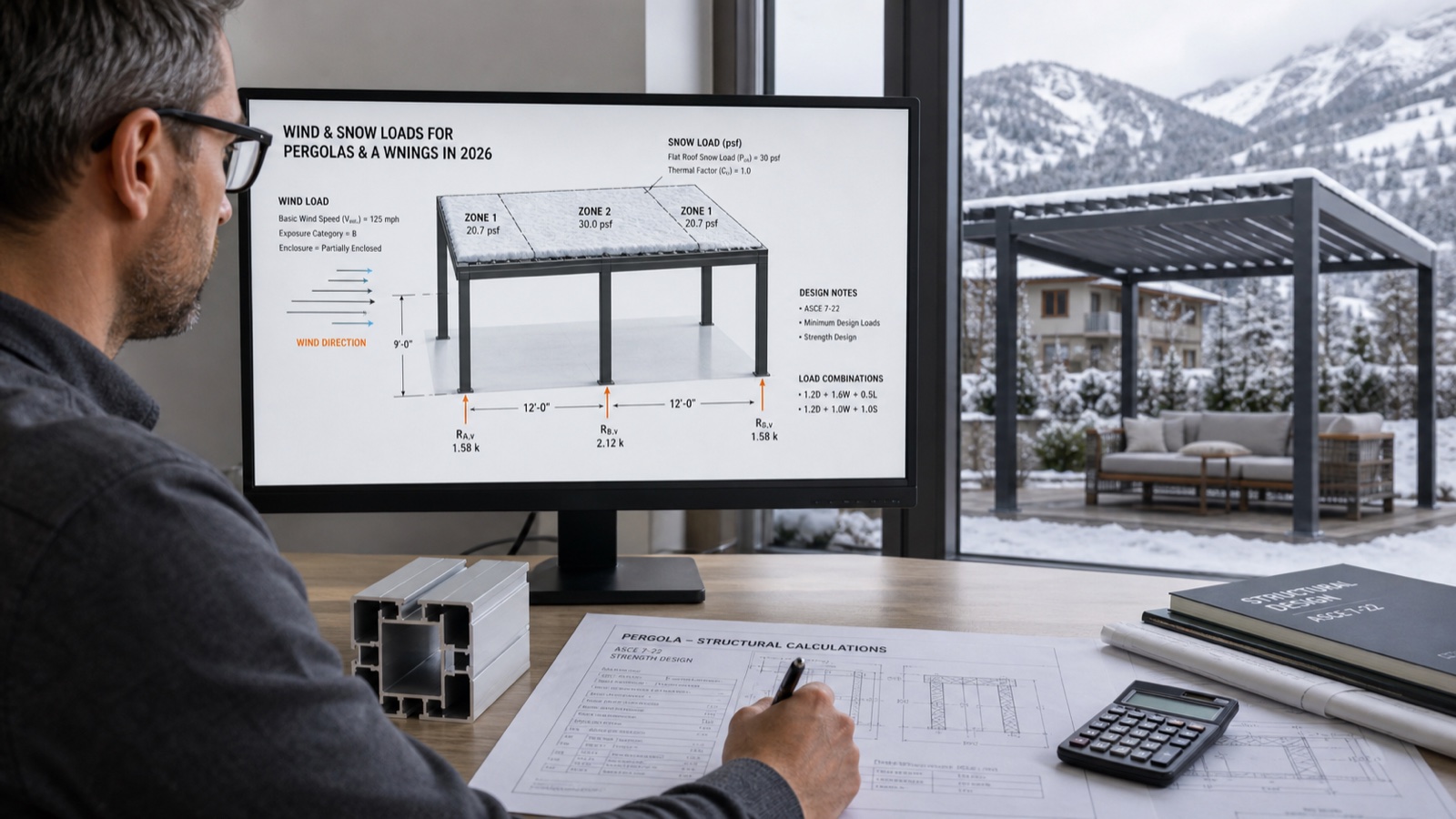
Table of contents
Why do wind and snow conditions matter?
Site conditions influence the choice of pergola, canopy or awning. Location, exposure, structure geometry, substrate and fixings all matter. A 3D visualisation alone does not establish the load capacity or safety of an installation.
Select products and assess the structure using the manufacturer's current documentation, the actual site conditions and applicable requirements. Where required, calculations and design should be completed by a qualified professional.
What should you collect before quoting?
- Project location, installation height and surrounding exposure.
- Product type, dimensions, roof or fabric choice and intended use.
- Manufacturer documentation on permitted configurations, fixings and operating limits.
- Information about the substrate, fixing points and any required site survey.
- The person responsible for technical review, calculations where needed, and design approval.
Do not transfer load limits from another model or installation without confirmation from the manufacturer and designer. Make assumptions and items requiring further review clear in the quote.
Standards and regulations: check the applicable edition
Requirements depend on the product, country and project circumstances. The Eurocodes provide structural design rules and their use can require the applicable national annex. The European Commission's Joint Research Centre publishes information and resources on the Eurocodes.
The EU Construction Products Regulation 2024/3110 repeals Regulation 305/2011 with exceptions and transitional provisions. That does not mean one set of requirements automatically applies to every pergola or awning. Manufacturers and those responsible for compliance should check the relevant rules, standards and documentation for the product and market.
How can a configurator support the process?
In an agreed implementation, a configurator can present manufacturer-supplied options and constraints and record the selected project version for further review. Rules need to be prepared, approved and maintained using reliable data. A configurator does not replace structural calculations, fixing checks or decisions by the person responsible for the design.
Before launch, test permitted and prohibited combinations, how exceptions are handled, and what information reaches the quote and order. Discuss the pergola configurator or awning configurator with Configurix to define a scope appropriate to your products.
Ready to try Configurix?
See how the configurator, quoting and CRM work together for your business.
Book a demo →Related articles
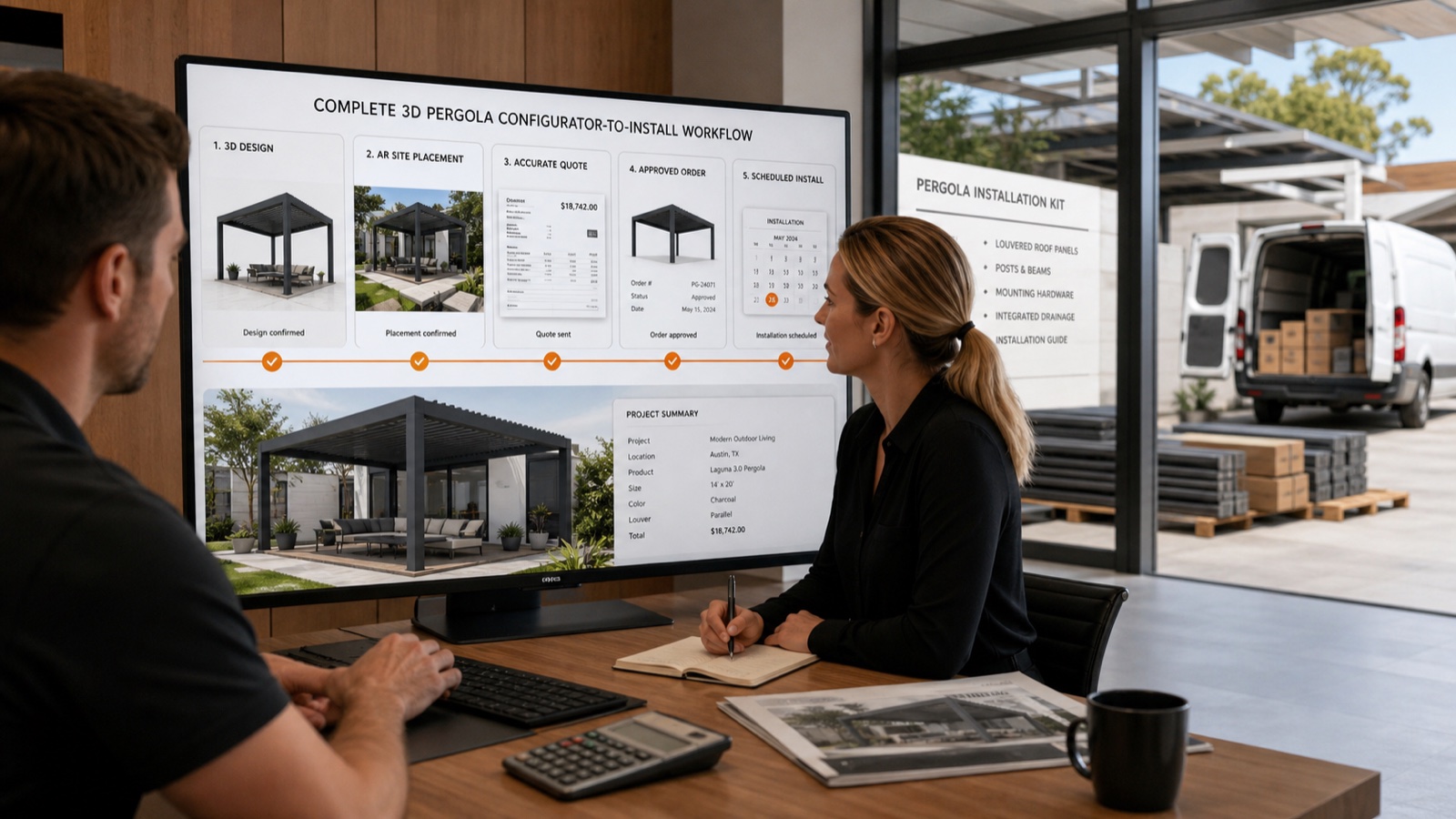
Instant 3D-to-Install Workflow: AR Preview, Branded PDFs & Scheduling
Turn a lead into a signed install in hours—not days. This guide shows outdoor-product installers how Configurix uses real-time 3D + AR, automatic pricing and branded PDF quotes to close pergola, awning and AC jobs end-to-end.
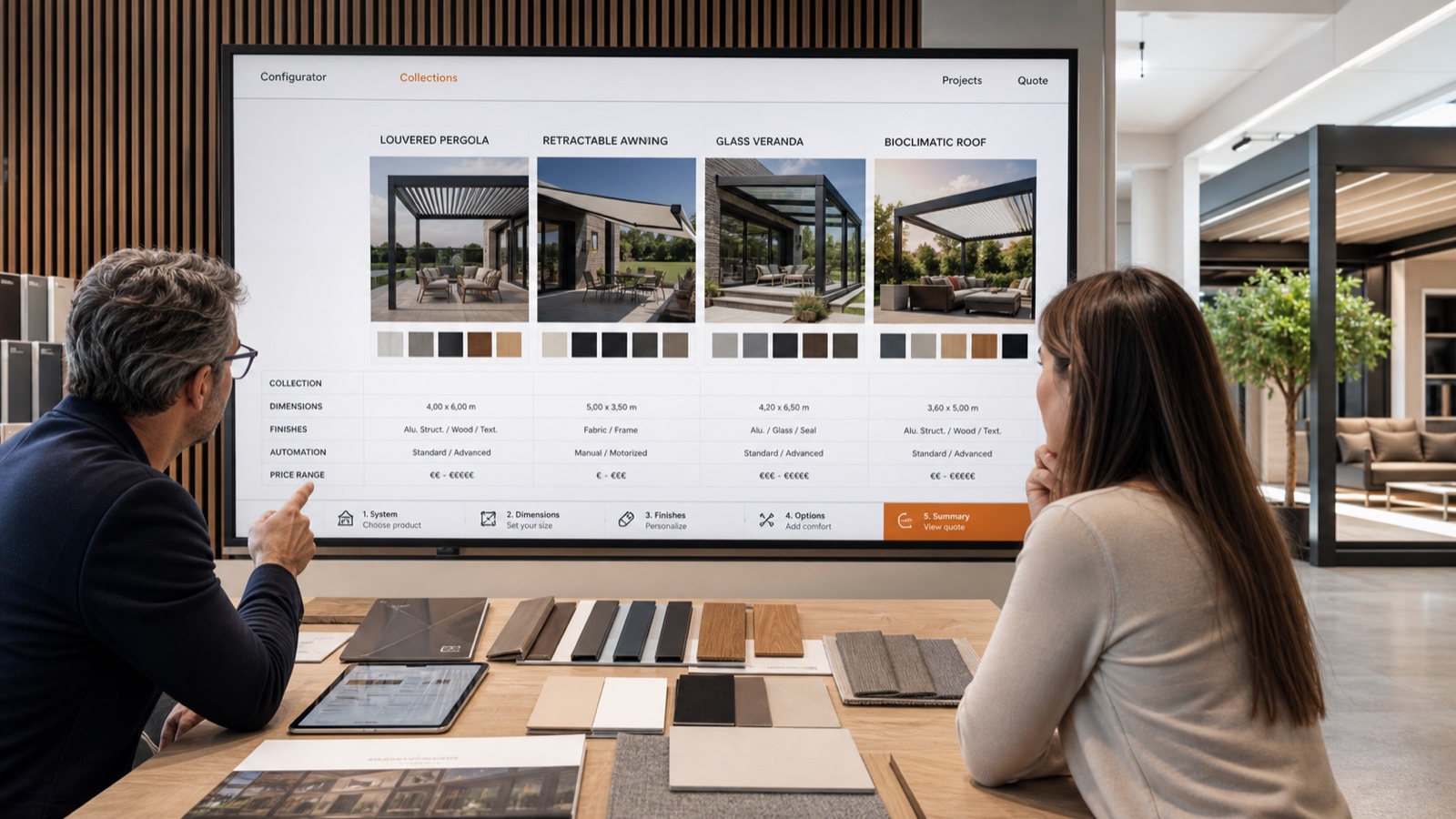
How to Choose a Multi-Brand Pergola and Awning Configurator
A dealer checklist for product catalogues, rules, pricing, visualisation, access and order handoff.
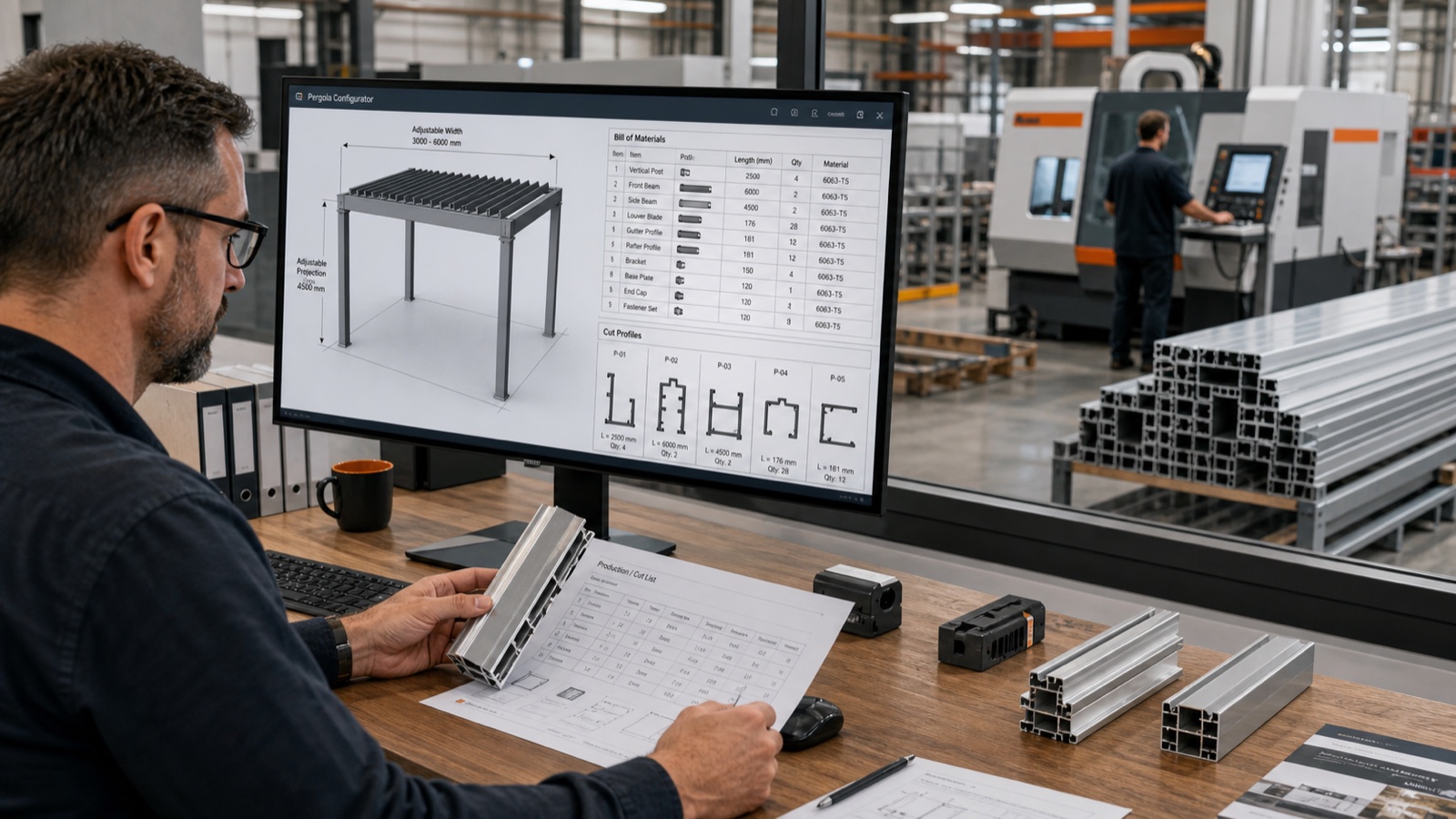
Parametric Configurators: Eliminating BOM Errors from Quote to Factory
How parametric configurators turn pergola, veranda and awning quotes into factory-ready BOMs — reducing errors, rework and lead time. Learn the workflow, metrics, and why Configurix is purpose-built to deliver it.
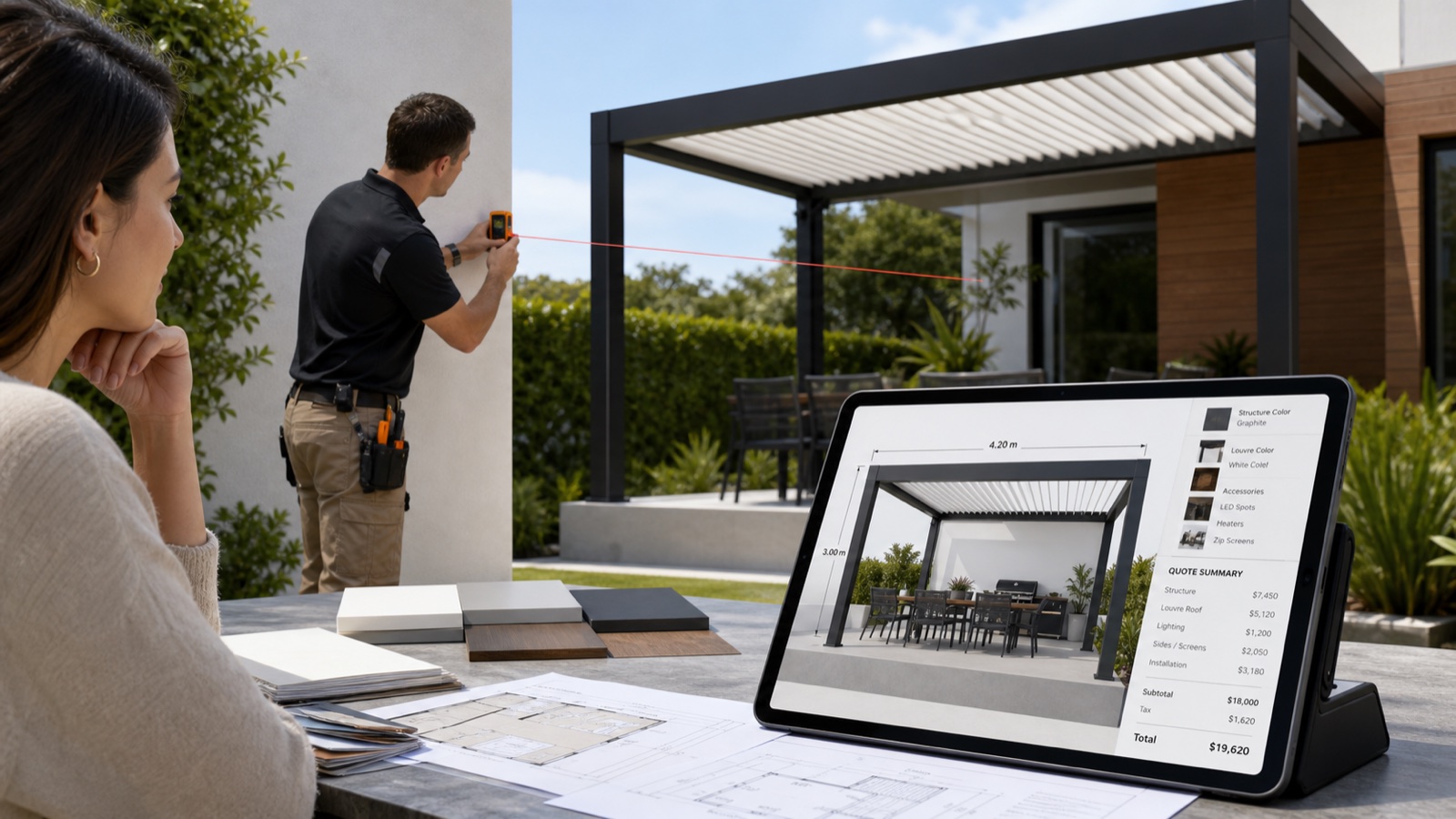
Build a complete pergola quote: site, options and pricing
A practical pergola quotation checklist covering mounting, roof systems, accessories, installation scope and itemised Configurix quotes.